
Targeting Pancreatic Cancer Differently
OncoTAb is developing tumor-targeted therapies designed to find and attack pancreatic cancer through a tumor-specific form of MUC1.
Our proprietary tMUC1-targeting platform is being advanced through two therapeutic approaches: targeted radiotherapy and T-cell engagement.
Explore Our Pipeline → Our Science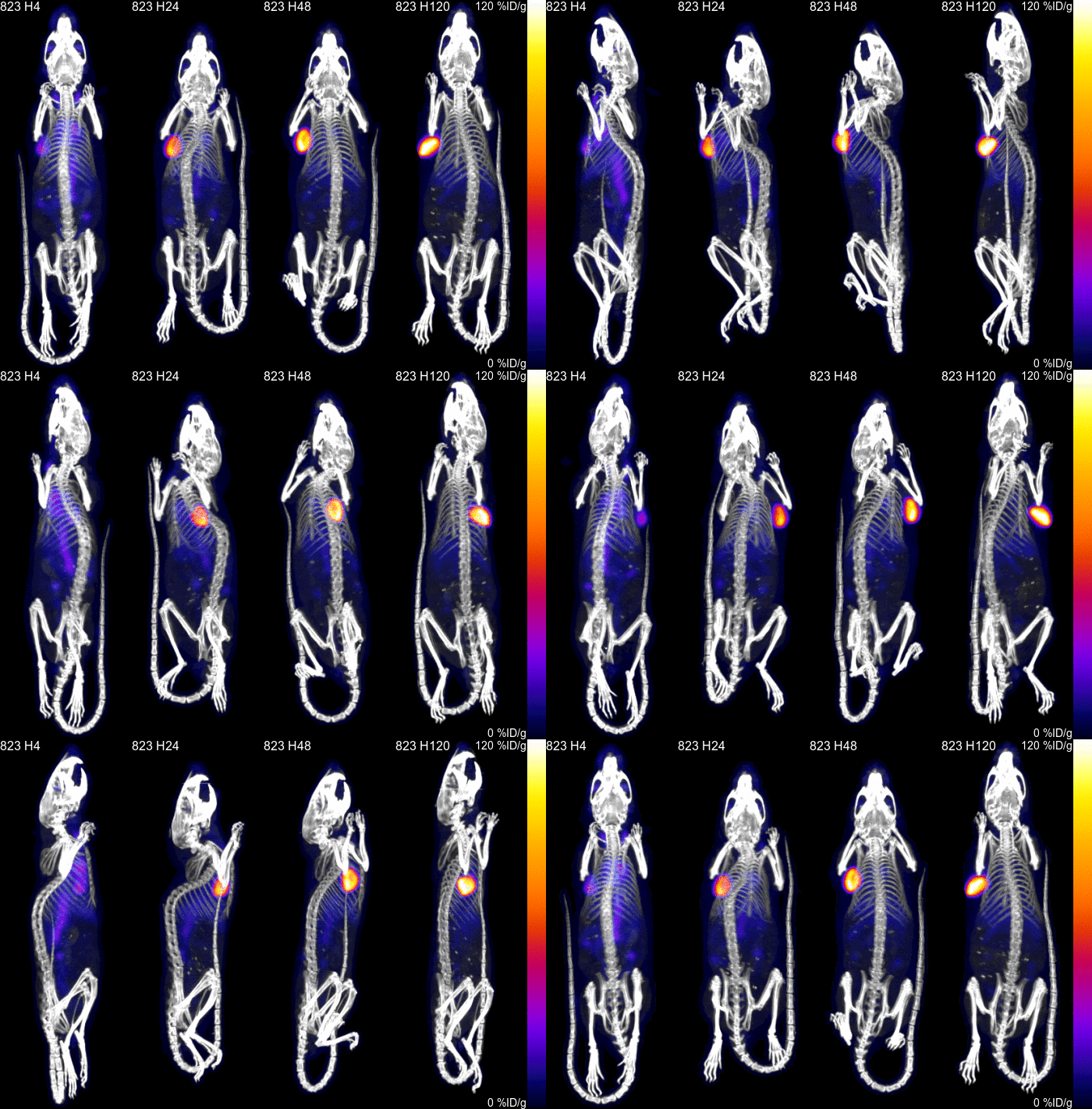
Pancreatic Cancer Needs New Approaches
Pancreatic cancer remains one of the most difficult cancers to treat. The disease is frequently diagnosed after it has advanced, and its aggressive biology and dense tumor microenvironment create substantial barriers to effective therapy.
At OncoTAb, we are developing therapies around a different premise: find a target that distinguishes cancer from normal tissue—and use it to attack the tumor selectively. Our target is tMUC1.
One Cancer-Associated Target. Multiple Ways to Attack the Tumor.
tMUC1: A Distinctive Tumor-Associated Form of MUC1
MUC1 is normally present on epithelial cells. During malignant transformation, changes in its expression and glycosylation expose unique regions of the molecule, creating the tumor-associated form known as tMUC1.
OncoTAb's proprietary targeting technology was developed to recognize tMUC1 while minimizing binding to the normal form of MUC1. Importantly, the targeting agent exhibits minimal binding to circulating tMUC1 while strongly recognizing tMUC1 presented on the tumor cell surface, helping preserve its availability for tumor targeting.
tMUC1 is expressed in approximately 80% of pancreatic cancers, creating the potential for tumor-targeted patient selection, imaging, and therapy.
Learn About Our Science →Two Ways to Target tMUC1
Delivering Radiation Directly to Cancer
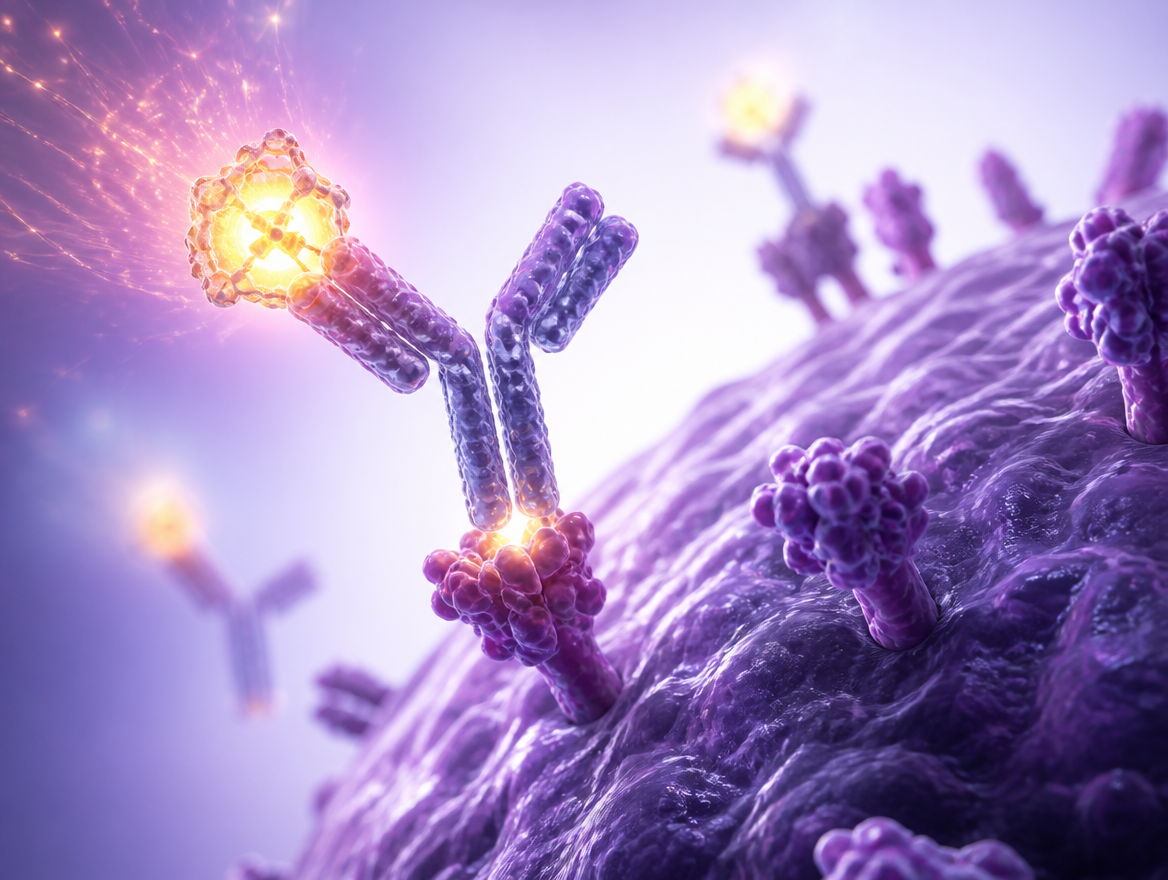
OncoTAb is developing a tMUC1-targeted radiopharmaceutical designed to carry a therapeutic radioisotope to pancreatic cancer. Our current program is evaluating multiple tMUC1-targeting formats to optimize tumor targeting, penetration, and exposure—developed as a radiotheranostic integrating molecular imaging for potential patient selection with targeted radiotherapy.
Explore the Radiotheranostic Program →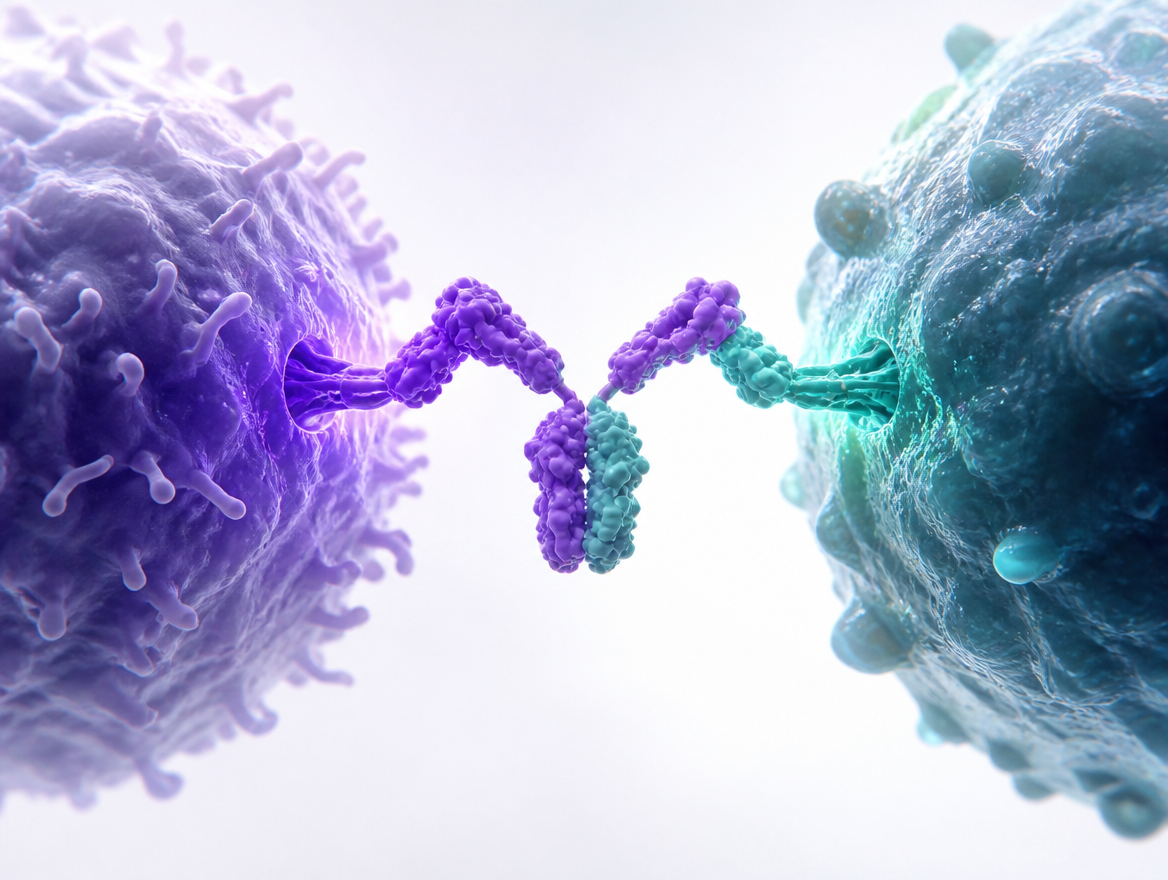
Redirecting T Cells Against Pancreatic Cancer
MUCD3 is OncoTAb's proprietary tMUC1 × CD3 bispecific T-cell engager. It is designed to bind tMUC1 on cancer cells and CD3 on T cells, bringing T cells into close proximity with the tumor and activating a targeted immune response. MUCD3 is advancing through preclinical development for pancreatic cancer.
Explore MUCD3 →Seeing Tumor Targeting
The Targeting Agent Finds and Remains at the Tumor
Representative longitudinal SPECT/CT imaging following administration of a radiolabeled tMUC1-targeted agent in a tumor-bearing mouse. Images demonstrate accumulation and retention of the agent at the tumor site. Adapted from Kelly et al., Theranostics 2020;10(15):6946–6958 (CC BY).
Advancing Preclinical Development
OncoTAb's therapeutic programs are supported by competitive federal research funding and collaborations with academic and specialized drug development organizations.
OncoTAb's pancreatic cancer research and development programs have received support from the National Institutes of Health and the National Cancer Institute, with additional matching grant support from North Carolina's One North Carolina Small Business Program.
View Our PipelineBuilding the Next Generation of Tumor-Targeted Therapies
OncoTAb is advancing a proprietary tMUC1-targeting platform with potential applications across radiopharmaceutical therapy, immuno-oncology, and other targeted therapeutic modalities. We welcome discussions with biotechnology, pharmaceutical, radiopharmaceutical, and development partners interested in advancing tMUC1-targeted therapies.
Partner With OncoTAb →